
As artificial intelligence becomes increasingly integrated into education, students can access information, explore complex concepts, generate ideas and receive coding assistance within seconds. However, knowing how to use AI tools is not the same as understanding artificial intelligence.
If students can complete assignments more quickly with AI but cannot identify inaccuracies, explain the reasoning behind an answer or verify its sources, is technology helping them learn more effectively—or simply helping them finish their work faster?
This distinction is why AI literacy is becoming an increasingly important competency for students preparing for higher education.
AI literacy refers to the knowledge, skills and attitudes that enable individuals to understand artificial intelligence, critically evaluate its outputs and use it effectively, creatively and responsibly.
On June 18, 2026, the OECD and European Commission published their AI Literacy Framework for Primary and Secondary Education, emphasizing the importance of critical evaluation, informed decision-making and understanding the opportunities and risks associated with AI.
In 2024, UNESCO also introduced its AI Competency Framework for Students, identifying 12 competencies across four dimensions:
Human-centred mindset
Ethics of AI
AI techniques and applications
AI system design
Importantly, AI literacy is not limited to students interested in computer science or engineering. Whether students intend to pursue economics, psychology, communications, the arts or social sciences, understanding the role of AI in their chosen fields can support more informed academic and professional decisions.
Students do not need advanced programming skills to begin developing AI literacy. However, understanding some of the fundamental principles behind AI is important.
Large language models, for example, generate text using patterns learned from data. Their responses may appear coherent and convincing while still containing factual inaccuracies.
Recognizing these limitations encourages students to question AI-generated information rather than automatically accepting it as reliable.
As information becomes easier to generate, the ability to evaluate its quality becomes increasingly important.
When using AI for academic research, students should consider questions such as:
Where does this information come from?
Are the cited sources genuine and credible?
Is the information relevant and up to date?
Are there alternative perspectives being overlooked?
Can I independently explain and defend this conclusion?
For example, a student researching climate change might use AI to identify initial research directions but should verify the information using reliable sources such as NASA or the Intergovernmental Panel on Climate Change.
These habits help students develop the independent research skills they will need at university.
One of the educational benefits of AI is its ability to support learning at an individual's own pace.
However, the quality of that learning depends significantly on how students interact with technology.
Instead of asking AI to solve an entire mathematics problem, students can request hints, explanations or feedback on their own reasoning.
Similarly, when studying economics, students can go beyond definitions by exploring real-world examples, comparing competing perspectives and generating questions to test their understanding.
The objective is not simply to receive answers faster, but to use AI to expand intellectual curiosity and independent learning.
AI literacy also involves recognizing issues related to privacy, copyright, algorithmic bias and accountability.
For students applying to universities in the United States, academic integrity is particularly important.
The Common App Fraud Policy identifies intentionally presenting substantive AI-generated content as one's original work as a form of application fraud.
Yale University's admissions AI policy also distinguishes between using AI for grammar checks or initial guidance and submitting application essays written by AI.
Students should review each institution's specific policies and understand that technology should support, rather than replace, their personal experiences, reflections and authentic voices.
Read more: 2026–27 Common App Essay & Strategic Insights.
AI can also serve as a tool for academic exploration and interdisciplinary problem-solving.
For example:
Students interested in economics can explore AI applications in consumer behavior analysis.
Students passionate about biology can investigate the role of machine learning in medical research.
Students interested in environmental science can explore AI applications in climate modeling and data analysis.
Students interested in psychology or social sciences can examine algorithmic bias and the influence of AI on human behavior.
These experiences can help students connect academic knowledge with real-world challenges while gaining a clearer understanding of their interests and potential university majors.
Students looking to pursue more advanced AI research can also explore the Spark Prep x InspiritAI research mentorship initiative.
Developing AI literacy does not necessarily require an advanced course or a complex technical project. Students can begin by adopting practical everyday learning habits:
Attempt to solve problems independently before consulting AI.
Verify information using credible, independent sources.
Use AI to receive feedback, explore different perspectives and test understanding.
Explain newly acquired knowledge in their own words.
Protect personal and sensitive information.
Follow academic and institutional guidelines regarding AI use.
A useful reflection after using an AI tool is to ask: If this technology were no longer available, would I still be able to explain what I have learned and complete a similar task independently?
As technology becomes increasingly capable of processing information, independent thinking, creativity, intellectual curiosity and responsible decision-making remain essential to meaningful learning.
At Spark Prep, we believe that preparing for college is about more than building a competitive application. It is an opportunity for students to develop academic and personal competencies that will continue to serve them throughout their education and beyond.
AI may help students access knowledge more quickly, but the ability to understand, evaluate and apply that knowledge is what enables them to become truly independent learners.
Explore Spark Prep's personalized admissions coaching programs to develop an academic journey aligned with your interests, strengths and long-term aspirations.
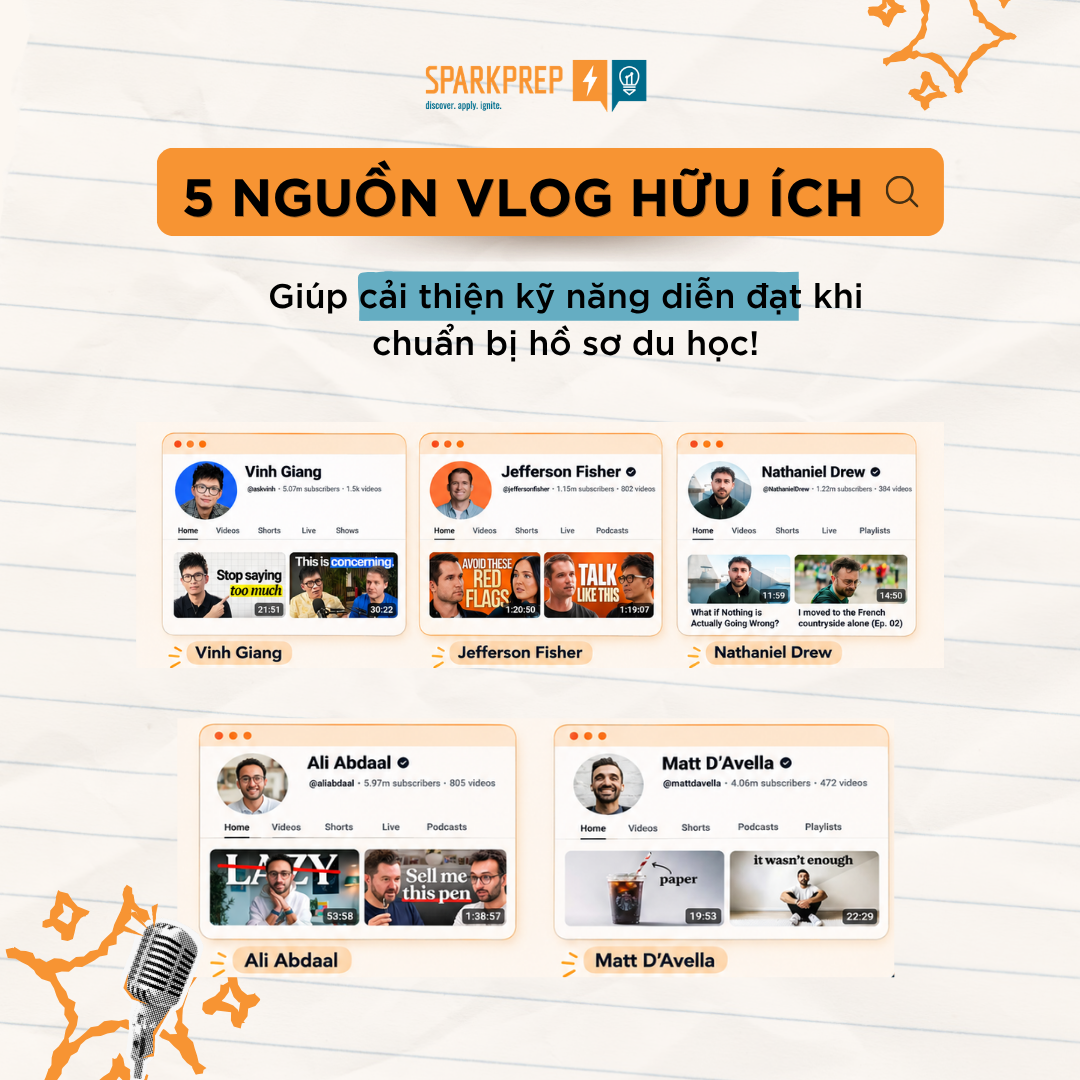 5 YouTube Channels to Improve Communication Skills for College Applications
Discover five YouTube channels that help students develop clear communication, storytelling and self-expression skills for college essays and interviews.
Read more.png) The Volume Fallacy: Why Reading Speed Doesn’t Make You Smarter
Reading slowly isn’t the problem. Discover how to build sustainable systems, create focused reading projects, reduce distractions, and develop a reader identity that compounds knowledge over time.
Read more 4 Signals That Make an Imperfect College Application Convincing
An imperfect application can still persuade admissions committees when students demonstrate four key signals: self-awareness, strategic energy allocation, authentic fit, and genuine growth through challenges.
Read more.png) 5 Parent Tips for Navigating College Admission Decisions
College decisions trigger strong emotions. Learn research-backed tips to help parents respond thoughtfully, support teens emotionally, reduce pressure, and maintain healthy family dynamics during admission season.
Read more.png) Dos & Don’ts for Ph.D. Applications: How Admissions Committees Really Evaluate Your App
Applying for a Ph.D.? Learn the most common application mistakes, how admissions committees think, and what truly strengthens your chances beyond grades and test scores.
Read more
Hanoi: 4th floor, 102-104 Lang Ha, Dong Da District
HCM: Toong Tan Hung, F16 Street No. 10 Him Lam Urban Area, Tan Hung Ward, District 7


Please call our hotline only if you have questions about Spark Prep’s services. For other inquiries, including sponsorships and partnerships, please send us an email to [email protected]


©2023, Spark Prep. All Rights Reserved
